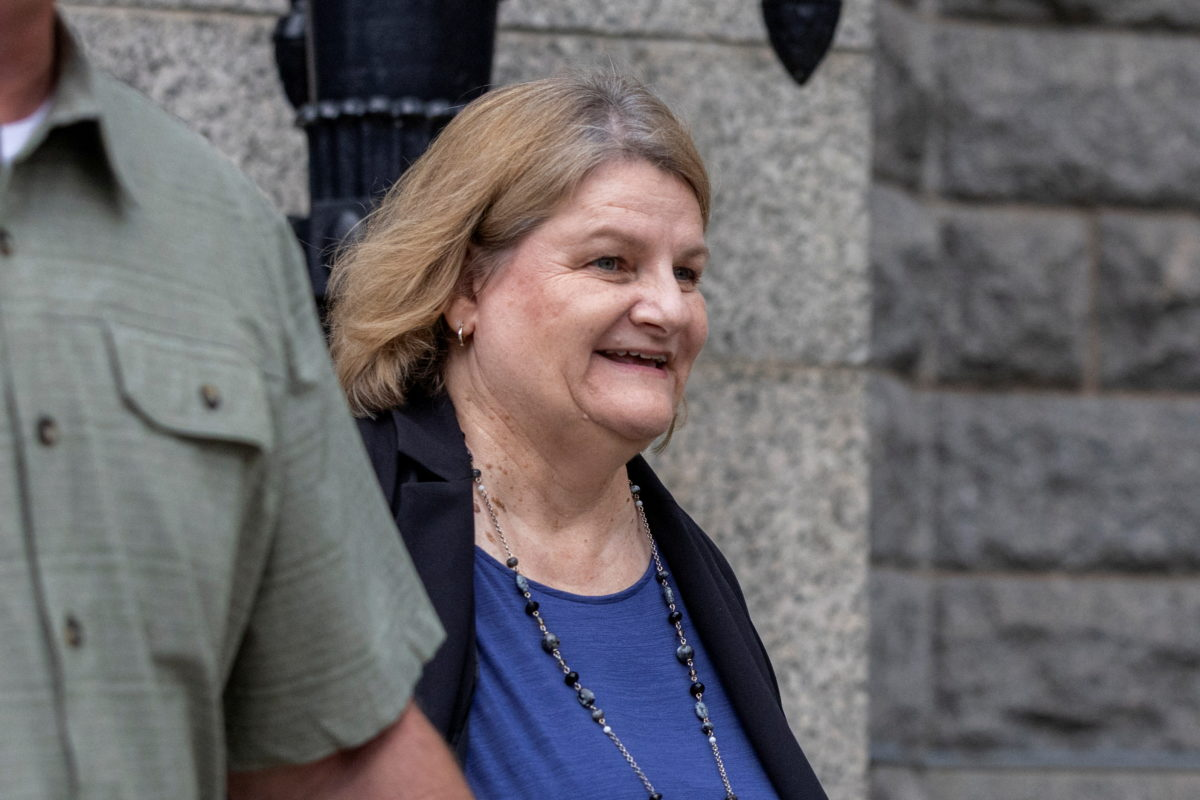
A Wisconsin courtroom, a fugitive warrant, and five minutes of decisions. That’s what turned Hannah Dugan from a respected Milwaukee County judge into a national story about the limits of judicial power.
Here’s what actually happened, where the case stands now, and what the sentencing means going forward.
Who Is Judge Hannah Dugan?
Hannah Dugan spent nearly 20 years working at Legal Action of Wisconsin and the Legal Aid Society of Wisconsin, representing low-income clients before she ever put on a robe. Voters elected her as a Milwaukee County Circuit Court judge in 2016.
Colleagues described her as a dedicated public servant with no prior criminal record. That reputation is exactly why her case landed so hard — this wasn’t a controversial figure with a history of run-ins. It was a nine-year judicial career that ended over roughly five minutes of decisions made under pressure.
What Happened on April 18, 2025
Federal immigration agents came to the Milwaukee County Courthouse to arrest Eduardo Flores-Ruiz, a Mexican national who had illegally re-entered the U.S. and was due to appear in Dugan’s courtroom on battery charges.
When Dugan learned ICE agents were in the hallway outside her courtroom, she and another judge questioned them and directed them to the chief judge’s office. She then returned to her courtroom, called Flores-Ruiz’s case as scheduled, and led him and his attorney out through a private hallway normally reserved for staff and jurors.
Courtroom audio caught Dugan telling her court reporter she would “get the heat” for what she’d just done. Flores-Ruiz and his lawyer eventually emerged into the public corridor, where agents were waiting. He was arrested after a short foot chase and has since been deported.
The Trial and Conviction
A federal jury reached its verdict in December 2025: guilty on the felony charge of obstructing a federal immigration proceeding, not guilty on a separate misdemeanor charge of concealing a fugitive.
Dugan resigned from the bench on January 3, following the conviction. Her legal team pushed back hard afterward, asking U.S. District Judge Lynn Adelman to throw out the verdict or grant a new trial. They pointed to a similar case, United States v. Hernandez, where an obstruction conviction was overturned on appeal earlier in the year. Adelman wasn’t persuaded — the situations differed enough, in his view, that the precedent didn’t apply. He upheld the conviction.
Sentencing: What’s at Stake
Sentencing has been pushed back more than once, and it’s now scheduled for July 8, 2026, at the federal courthouse in downtown Milwaukee. Dugan is expected to make her first public statement since her arrest more than a year ago.
The numbers on the table:
- Federal sentencing guidelines: 15 to 21 months in prison, based on the presentence report
- Maximum possible sentence: 5 years
- What the defense wants: Time served, arguing the guideline range should really be zero to six months
- What prosecutors want: No specific number, but they’ve called it a serious offense “warranting a correspondingly serious sentence”
Judge Adelman isn’t bound by the guidelines. He has a track record of sentencing below them, though not in every case, so neither side can predict the outcome with much confidence.
Two Very Different Arguments
This is where the case stops being simple. Both sides have built genuinely different narratives around the same five minutes.
The defense’s case: Dugan reacted in the moment, without premeditation, to protect what she saw as due process in her own courtroom. Her team submitted nearly 20 letters of support and pointed to her decades of legal aid work for disadvantaged clients. They’ve also argued the arrest itself went too far — she was handcuffed, frisked, and later appeared in court shackled at the ankles, treatment they call deliberately humiliating. Since the arrest, she’s reportedly moved out of her home and taken on security measures due to threats.
The prosecution’s case: Judges don’t get to override federal law because they personally disagree with it. Prosecutors argue Dugan violated her judicial oath and put law enforcement and the public at risk by interfering with a lawful arrest. They’ve also pointed to her continued refusal to acknowledge wrongdoing as a reason the sentence needs to send a clear message.
Both arguments have real legal weight, and this dispute — how much discretion a judge has when federal agents show up in their own courthouse — isn’t unique to Dugan. It’s part of a broader, ongoing legal fight between local courts and federal immigration enforcement playing out in multiple states.
Why Obstruction Cases Against Judges Are Exceptionally Rare
Most of the coverage around this case focuses on the immigration angle. What often gets lost is how unusual it is for a sitting judge to face federal criminal charges at all.
Judges make disputed calls constantly. The system has a normal way of handling that: appeals, judicial ethics commissions, and disciplinary review boards. Criminal prosecution is a different tier entirely, reserved for conduct prosecutors believe crosses from judicial error into intentional wrongdoing.
| Situation | Typical Outcome | Rare Outcome |
|---|---|---|
| Judicial mistake or disputed ruling | Appeal | Criminal charge |
| Ethics or conduct violation | Judicial discipline, censure, or removal proceedings | Criminal prosecution |
| Alleged intentional obstruction | Investigation, possible discipline | Federal felony charge |
That’s part of why the Dugan case drew national attention beyond Wisconsin. It’s not just that immigration enforcement was involved — it’s that federal prosecutors rarely take the step of charging a judge criminally for actions connected to her own courtroom.
What the 7th Circuit Will Actually Review on Appeal
Dugan’s team has confirmed they’ll appeal to the 7th U.S. Circuit Court of Appeals regardless of the sentence. But an appeal isn’t a second trial, and it doesn’t re-litigate the facts the jury already decided.
Appellate judges generally look at questions like:
- Did the evidence presented support a finding of intent, as the obstruction statute requires?
- Were the jury instructions an accurate statement of what obstruction actually requires prosecutors to prove?
- Did the district court correctly distinguish this case from precedent the defense cited, like United States v. Hernandez?
- Did any evidentiary rulings during trial affect the fairness of the proceedings?
What appellate courts typically don’t do is re-decide whether they personally would have reached the same verdict as the jury. That distinction matters here: Dugan’s appeal can succeed on a legal error even without new facts, or it can fail even if members of the public still disagree with the outcome.
Myth vs. Reality: Common Misconceptions About This Case
Headlines compress legal concepts, and that tends to create some predictable misunderstandings. A few worth clearing up:
| Myth | Reality |
|---|---|
| A judge can never be prosecuted for actions taken in court | Judicial immunity mainly shields judges from civil lawsuits over official acts. It doesn’t broadly shield alleged criminal conduct. |
| The not-guilty verdict on the concealment charge means prosecutors had a weak case | Different charges require proof of different legal elements. A jury can find one element met and another not, without any inconsistency. |
| Federal sentencing guidelines determine the sentence | Since the Supreme Court’s 2005 decision in United States v. Booker, the guidelines are advisory, not mandatory. Judges can and do sentence outside them. |
| Filing an appeal automatically delays any prison time | Staying out of custody during an appeal requires meeting a separate legal standard; it isn’t automatic. |
| This case will set nationwide immigration policy | The appeal addresses this prosecution and the legal principles behind it. It doesn’t rewrite immigration law itself. |
What Experienced Federal Defense Lawyers Actually Watch
Media coverage tends to predict sentencing based on public sentiment. Practicing federal defense attorneys usually watch a narrower, less dramatic set of signals:
Sentencing judges often weigh: the defendant’s acceptance of responsibility, the quality (not just quantity) of character letters submitted, the presentence investigation report’s framing of the offense, and statements made by the defendant at the hearing itself.
None of these function as a fixed formula — a sentencing judge’s individual philosophy still plays the largest role, and Judge Adelman’s own record of sometimes going below the guideline range (and sometimes not) is exactly the kind of variable that makes this one genuinely hard to predict.
How Small Factual Differences Can Change a Legal Outcome
One thing this case illustrates well, independent of how anyone feels about the verdict: obstruction law often turns on narrow factual distinctions rather than the broader political story around a case.
To be clear, the scenarios below are general legal hypotheticals for illustration — not claims about what actually happened in this case.
| Hypothetical Variation | Possible Legal Impact | Why It Matters |
|---|---|---|
| The routing decision had been made by courthouse security staff, not the judge | Could shift the analysis of whose intent is at issue | Obstruction charges hinge on the defendant’s own state of mind |
| The defendant had never been located afterward | Could affect how prosecutors frame the completed-versus-attempted nature of the offense | Completed obstruction and attempted obstruction can carry different legal weight |
| A written courthouse policy already governed how ICE arrests should be handled | Could reframe the act as compliance with policy rather than personal obstruction | Institutional policy is often relevant to an intent defense |
| The judge had only delayed proceedings rather than directing an alternate exit | Could change whether the conduct meets the statute’s obstruction threshold at all | Obstruction generally requires an affirmative act, not just delay |
This is why criminal law rarely reduces cleanly to the political narrative around it. Small factual differences change which statute applies, what prosecutors have to prove, and how a jury is instructed to think about intent.
What Happens Next
Regardless of what sentence Judge Adelman hands down on July 8, Dugan’s defense has already confirmed she’ll appeal to the 7th U.S. Circuit Court of Appeals. That means the July sentencing is very unlikely to be the final chapter of this story.
Frequently Asked Questions
What was Judge Hannah Dugan convicted of? A federal jury convicted her of one felony count of obstructing a federal immigration proceeding. She was acquitted on a related misdemeanor charge of concealing a fugitive.
When is Hannah Dugan’s sentencing? Sentencing is scheduled for July 8, 2026, before U.S. District Judge Lynn Adelman in Milwaukee.
What’s the maximum sentence Dugan faces? Up to 5 years in prison, though the presentence report recommends a range of 15 to 21 months. First-time, non-violent offenders rarely receive the statutory maximum.
Is Hannah Dugan still a judge? No. She resigned from the Milwaukee County Circuit Court bench on January 3, following her conviction.
Will Dugan appeal? Yes. Her legal team has said they will appeal the conviction to the 7th Circuit Court of Appeals regardless of the sentence she receives.
The Bottom Line
This case sits at the intersection of judicial independence and federal immigration authority, and reasonable people land on different sides of it. What’s not in dispute is the timeline: a nine-year judicial career ended over a single, brief decision in a courthouse hallway, and the legal fallout from that decision is far from over.
Recommend article to read: Who Is Elle Fanning Dating? A Look at Her Boyfriend, Her Sister, and Her Big 2026
Sources: The Hill, WTMJ Milwaukee, Wisconsin Law Journal, Minnesota Lawyer, and court filings in United States v. Dugan. General legal concepts referenced (judicial immunity doctrine, the advisory nature of federal sentencing guidelines under United States v. Booker, and standard appellate review practices) reflect well-established U.S. law, not case-specific claims. This is a developing case — sentencing details may change after July 8, 2026.